Exploring the Cultural Resonance of the Chintaron Typeface
The Intersection of Calligraphy and Digital Typography
In the realm of digital design, the choice of typeface goes far beyond mere legibility; it is a primary vehicle for cultural expression and emotional resonance. When designers seek to capture the essence of Indian heritage while maintaining a contemporary edge, they often turn to fonts that bridge this gap. Chintaron emerges as a compelling solution in this space, offering a distinct visual language that draws deeply from the well of traditional Indian scripts while embracing the precision required for modern digital applications. It represents a sophisticated evolution in Hindi display typography, where the fluidity of handwritten calligraphy meets the structural integrity of vector-based design.
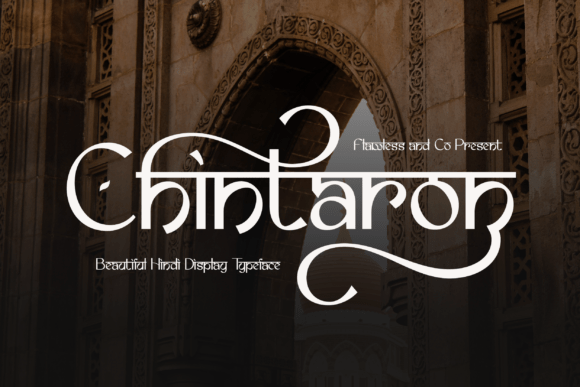
The architecture of Chintaron is defined by its intricate letterforms, which mimic the natural flow of ink on paper. Unlike standard sans-serif or serif fonts that prioritize uniformity, this typeface celebrates the organic variations found in classic Devanagari calligraphy. The designers have paid careful attention to the matras (vowel signs) and the conjunct characters, ensuring that they interact seamlessly. This results in a rhythm that feels natural to the eye, allowing the text to breathe even when used in dense display settings. The stylistic strokes and swashes are not merely decorative; they serve to connect the letters in a way that enhances readability and visual flow, a critical consideration when working with complex scripts like Hindi.
Anatomical Precision and Design Characteristics
To truly appreciate the utility of Chintaron, one must examine its specific design characteristics. The font is categorized as a display typeface, meaning it is optimized for larger sizes where its details can be fully appreciated. However, its design philosophy is rooted in clarity. The curves are soft yet defined, avoiding the harsh angles that can sometimes make ornate fonts difficult to read.
One of the most significant technical features of Chintaron is its PUA (Private Use Areas) encoding. For the uninitiated, this is a critical feature that unlocks the full potential of the font. Standard character sets often limit the number of glyphs available to the user. By utilizing PUA encoding, Chintaron ensures that every stylistic swash, alternate character, and ligature is accessible directly through standard character map tools and design software like Adobe Illustrator, Photoshop, or InDesign. This accessibility is vital for designers who wish to customize their typography without needing advanced OpenType feature knowledge.
The visual weight of the font is balanced to provide a rich, cultural identity without overwhelming the composition. It features a medium-to-high contrast stroke, typical of high-quality display fonts, which helps it stand out against complex backgrounds. Whether used in a monochromatic scheme or paired with vibrant colors, the font retains its structural integrity, making it a reliable tool for branding where consistency across different media is paramount.
Practical Applications in Modern Workflows
The versatility of Chintaron allows it to be applied across a wide spectrum of professional environments. Its primary strength lies in projects that require a strong cultural anchor, but its modern sensibilities make it adaptable to various creative workflows.
Branding and Corporate Identity
For businesses operating within the cultural, fashion, or hospitality sectors, establishing a brand identity that feels authentic is essential. Chintaron provides a typographic voice that speaks of tradition and quality. It is particularly effective for logo design, where a unique letterform can become the cornerstone of a brand's visual memory. When a business wants to convey warmth, heritage, and sophistication—think boutique hotels, artisanal food brands, or cultural festivals—this font serves as an excellent primary logotype or wordmark.
Editorial and Publishing Design
In the publishing world, cover art and chapter headings require typefaces that can grab attention and set the mood instantly. The intricate swashes of Chintaron make it ideal for book covers, magazine mastheads, and poetry layouts. In Hindi literature publishing, where the aesthetic of the script is as important as the content, a font like this elevates the reading experience. It transforms the text from a mere vessel of information into a piece of visual art, engaging the reader before they even parse the meaning of the words.
Event Stationery and Invitations
Wedding invitations, festival posters, and ceremonial programs often rely heavily on typography to convey the grandeur of the occasion. The elegance inherent in Chintaron makes it a perfect fit for such materials. Its ability to mimic the look of hand-lettered calligraphy adds a personal, bespoke touch to printed materials, making recipients feel valued. The font's stylish strokes can be used to highlight names, dates, or specific phrases, creating a hierarchy of information that guides the viewer's eye effortlessly.
Technical Considerations for Implementation
While the aesthetic qualities of Chintaron are immediately apparent, successful implementation requires a technical understanding of how the font behaves in different environments.
Pairing and Hierarchy
As a display font with strong personality, Chintaron requires careful pairing. It generally pairs best with clean, neutral body text fonts. If the headline uses the ornate curves of Chintaron, the body copy should likely use a standard sans-serif or a legible serif font to ensure the content remains digestible. Overusing the display font in long paragraphs can lead to visual fatigue; therefore, it is best reserved for headlines, sub-headers, pull quotes, or call-to-action buttons.
Color and Contrast
Because of the intricate details and varying stroke widths within the font, Chintaron performs best with high contrast. Using it in a light color on a dark background (or vice versa) ensures that the swashes and alternate characters do not bleed together. When printing, designers should be mindful of ink spread on porous paper stock, which might obscure the fine details of the strokes. Testing the font at the intended output size is always recommended to verify that the cultural nuances are preserved.
Licensing and Accessibility
For professionals, understanding the licensing and technical accessibility is just as important as the design. The PUA encoding of Chintaron democratizes access to advanced glyphs, meaning that even users with basic software can utilize the alternate characters. This is particularly helpful for small business owners or hobbyists who may not have access to high-end design suites but still want to create professional-looking materials using tools like Canva or basic word processors that support character maps.
The Role of Typography in Cultural Preservation
Fonts like Chintaron play a subtle but vital role in the digital preservation of calligraphic traditions. As the world moves increasingly toward screen-based communication, there is a risk that the tactile art of hand-lettering may fade. By digitizing the aesthetics of traditional Indian scripts and making them accessible to a global audience, type designers ensure that these artistic forms remain relevant.
When a designer chooses Chintaron for a project, they are doing more than selecting a tool; they are participating in a lineage of artistic expression. The font acts as a bridge, allowing modern technology to express ancient sentiments. It enables a new generation of creators—whether they are designing a mobile app interface for a meditation practice or branding a contemporary dance festival—to utilize the visual language of their heritage with precision and ease.
Observations on Usability and Versatility
From a usability standpoint, the font offers a delightful experience. The distinctiveness of the letterforms ensures that it is rarely mistaken for generic system fonts, giving projects an immediate sense of custom design. However, this distinctiveness also demands a level of design confidence. It is a font that commands attention, and therefore, it works best in compositions where the typography is intended to be the focal point.
Furthermore, the versatility of Chintaron extends to its emotional range. Depending on the context and the accompanying design elements, it can appear festive and celebratory, or it can look solemn and traditional. This chameleon-like quality is a testament to its well-balanced design. It does not lock the user into a single aesthetic but rather offers a foundation upon which various moods can be built.
In summary, Chintaron stands as a robust example of how typography can serve as a functional tool while simultaneously acting as an artistic statement. Its blend of traditional curves, modern structure, and technical accessibility (via PUA encoding) makes it a valuable asset for anyone looking to infuse their work with the richness of Indian visual culture. Whether for commercial branding, artistic expression, or personal projects, it offers a sophisticated path to visual storytelling.