Letrado Typeface: Evaluating a Bold, Hand-Crafted Serif for Heritage Branding
In the search for a typeface that conveys authenticity and craftsmanship, designers often move beyond the sleek minimalism of modern sans-serifs. They look for a voice with history, texture, and a tangible quality. The Letrado typeface enters this space as a distinct option, offering a bold, hand-crafted serif style that blends old-world elegance with rustic Latin charm. Understanding its specific characteristics is the first step in evaluating whether it aligns with a project's goals.
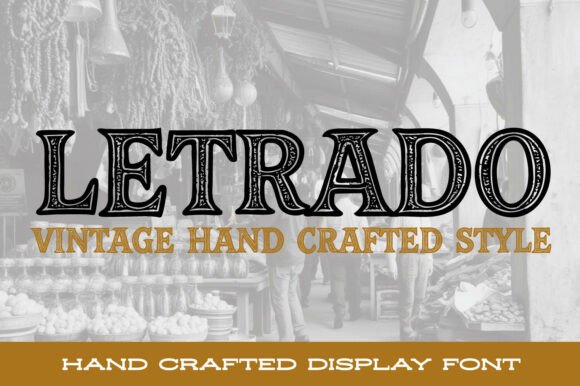
Letrado is not a standard serif font. Its defining feature is an inset carving effect, which gives each letter the impression of being engraved into wood or stone. This is complemented by subtly rough and irregular edges, mimicking the imperfections of traditional hand-cut type. The style is intentionally tactile, aiming to feel dimensional and substantial. It evokes the spirit of historic signage in Spanish plazas and Latin American mercados—ornate yet sturdy, with strong verticals and gracefully flared serifs. This combination of detail and texture is central to its identity.
Understanding Letrado's Distinctive Visual Language
To appreciate Letrado's place in design, it helps to break down its visual components. The inset shadows are not merely decorative; they create a sense of depth that suggests physical craftsmanship. This effect can make characters appear as if they were printed from an antique letterpress or chiseled by a skilled artisan. The slightly irregular edges further this organic feel, moving away from the flawless precision of digital-first fonts. This aesthetic is highly specific: it communicates heritage, manual labor, and a connection to traditional materials.
When compared to other serif categories, Letrado occupies a unique niche. It is more textured and stylistic than transitional or modern serifs like those found in academic or corporate contexts. It is also more refined and legible than many purely decorative or blackletter fonts. Its closest relatives might be found in the category of "vintage" or "engraved" display serifs, but its particular blend of Latin flair and tactile depth gives it a distinctive character. The strong verticals and flared serifs provide a stable, grounded structure, ensuring it remains readable at larger sizes despite its decorative elements.
Practical Applications and Best-Fit Scenarios
The true test of any typeface is its application. Letrado's design makes it exceptionally well-suited for specific use cases where its personality can shine without compromising function. It excels in contexts that demand a sense of history, authenticity, and artisanal quality.
- Restaurant and Hospitality Branding: For menus, signage, and packaging for establishments that emphasize traditional cuisine, craft beverages, or a rustic ambiance. A tapas bar, a craft brewery, or a farm-to-table restaurant could use Letrado to instantly communicate their ethos.
- Cultural Event Promotion: Posters, flyers, and digital graphics for festivals, markets, or art exhibitions that celebrate cultural heritage, folk art, or vintage themes.
- Artisanal Product Packaging: Labels and boxes for goods like specialty coffees, small-batch spirits, handmade ceramics, or gourmet sauces where the packaging itself tells a story of craftsmanship.
- Editorial and Book Design: Chapter titles, headers, or pull quotes in publications focused on history, travel, or culinary arts, adding a thematic accent without overwhelming body text.
In these scenarios, Letrado acts as a powerful brand voice. It immediately sets a tone that generic serif or sans-serif fonts cannot. The key is to use it strategically, often as a headline or display font, paired with a simpler, highly legible typeface for body copy. This contrast allows Letrado's detail to be appreciated without causing visual fatigue.
Evaluating Strengths and Considering Tradeoffs
Like any specialized tool, Letrado comes with inherent strengths and potential limitations. Its primary strength is its unmistakable personality. It delivers a strong, specific message that can be difficult to achieve with more versatile but neutral fonts. The craftsmanship in its design is evident, lending credibility to brands that want to project those values.
However, this specificity is also its main tradeoff. Letrado is not a workhorse font for all purposes. Its intricate details and textured edges can reduce legibility at very small sizes or in lengthy body text. In contexts demanding clean, neutral, or ultra-modern aesthetics, it would feel out of place. Furthermore, overuse can diminish its impact; it is most effective when used sparingly for emphasis.
When considering alternatives, designers might look at other vintage-inspired serif families. Some may offer a similar sense of age but with less pronounced texture, potentially offering better versatility. Others might lean into a different regional aesthetic, such as Art Deco or Victorian styles. The decision hinges on the specific emotional and cultural cues required. Letrado's Latin-inspired, hand-carved feel is its unique value proposition.
Making an Informed Decision: Is Letrado the Right Choice?
Choosing Letrado should be a deliberate decision based on project alignment. Ask yourself these key questions:
- What is the core brand identity? If the brand story involves heritage, manual skill, cultural roots, or rustic elegance, Letrado is a strong candidate. If the brand is modern, minimalist, or corporate, other options will be more appropriate.
- How will the font be used? If it's primarily for large, impactful headlines or logos, its details will be visible and effective. If you need a single font for an entire document, including small body text, its complexity may become a liability.
- Who is the audience? The font resonates with audiences that appreciate tradition, craftsmanship, and cultural depth. It may be less effective for contexts targeting a sleek, tech-forward demographic.
- What is the overall design system? Consider the supporting elements: colors, imagery, and secondary typefaces. Letrado pairs best with simple, clean sans-serifs or robust serifs that don't compete for attention.
In practice, testing is crucial. See how Letrado renders in your specific application—on a printed menu, a website header, or product packaging. Evaluate its readability in context and ensure it enhances, rather than overshadows, your message.
Ultimately, the Letrado typeface is a powerful tool for the right job. It offers a direct route to conveying heritage and craftsmanship through typography. By understanding its unique characteristics, weighing its strengths against its limitations, and carefully matching it to your project's needs, you can determine if it is the ideal choice to give your designs a vintage Latin flavor with detailed, tactile personality. For projects where that specific voice is needed, few options deliver as effectively.