Radiant Marquee: Capturing Vintage Glamour in Design
Typography is the voice of a project before a single word is read. It sets the mood, establishes credibility, and can instantly transport an audience to a different era or mindset. For designers, marketers, and entrepreneurs aiming to evoke a specific sense of luxury, celebration, and timeless showmanship, choosing the right typeface is a critical creative decision. One typeface that offers a direct portal to the golden age of entertainment is Radiant Marquee, a premium display font built on the principles of Art Deco geometry and theatrical spectacle.
The Anatomy of a Show-Stopping Font
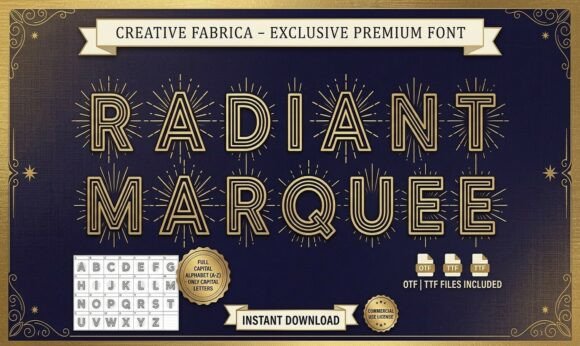
At its core, Radiant Marquee is an all-caps display typeface, meaning it is engineered for impact rather than long-form reading. Its design philosophy is rooted in the architectural and decorative trends of the early 20th century, specifically the bold, symmetrical lines of Art Deco. What makes it unique is its sophisticated multi-line inline structure. This isn't a simple outline; it's a layered effect that creates a visual sense of depth and vibration, much like the buzzing glow of neon tubing or the intricate metalwork of a vintage theater sign.
Surrounding each letterform is a distinctive sunburst or starburst motif. This detail is not merely ornamental; it is functional in establishing the font's primary aesthetic. It directly mimics the radiant bulbs and decorative frames of a classic Broadway marquee, instantly signaling celebration, premiere events, and a high-stakes atmosphere. This combination of geometric precision and ornate detailing makes Radiant Marquee feel both monumental and celebratory.
Practical Applications for Modern Creators
Understanding a font's aesthetic is the first step; applying it effectively is where the real work begins. The key to using a display font like Radiant Marquee is context. Its high level of detail and strong personality means it excels in headline and hero applications where it can command attention without competing with other visual elements.
- Event Branding and Invitations: This is the font's native environment. Think gala dinners, award ceremonies, product launch parties, or New Year's Eve events. Using Radiant Marquee for the main headline on an invitation or a digital event banner immediately establishes a tone of upscale celebration. It tells the guest, "This is an occasion."
- Theater and Arts Marketing: For playbills, promotional posters for a musical, or the branding for a cabaret night, this font is a perfect fit. Its inherent connection to the stage makes it an authentic choice for the performing arts, lending a professional and dramatic flair to all marketing materials.
- Boutique Hospitality and Lifestyle Branding: Imagine the signage for a speakeasy-style bar, the logo for a luxury hotel, or the menu headers for an upscale restaurant. Radiant Marquee can help build a brand identity steeped in nostalgia and glamour. It suggests a premium experience, attention to detail, and a touch of theatrical magic.
- Editorial and Digital Design: In digital contexts, use it for website hero sections, blog post titles for a lifestyle or design-focused site, or as a powerful text element in social media graphics. A single, well-placed word set in Radiant Marquee can stop a user mid-scroll.
Adapting Radiant Marquee for Different Goals
The true skill in typography lies in adaptation. Radiant Marquee is not a one-size-fits-all solution, but a specialized tool. Here’s how different users can harness its power effectively:
For the Graphic Designer:
Pairing is everything. Because Radiant Marquee is so detailed and bold, it demands a quiet partner. Combine it with a clean, simple sans-serif font for body copy to create a clear hierarchy. This contrast allows the marquee font to shine as a headline without overwhelming the viewer. Use it for initial caps in a magazine layout or as a pull quote to add a moment of visual drama. When using it in a logo, ensure the business name is short; its all-caps, wide-set nature works best with concise words or acronyms.
For the Entrepreneur or Small Business Owner:
Consistency is key to building brand recognition. If you choose Radiant Marquee for your brand, use it strategically and sparingly. It might be the perfect font for your primary logo lockup, but it should not be used for your website's body text or email newsletters. Instead, define it as your "headline" or "accent" font. Use it on your packaging, in your social media ad campaigns, and on special promotional materials to maintain a consistent, high-end feel without sacrificing readability.
For the Marketer or Blogger:
Think about the emotional trigger you want to pull. Are you promoting a "VIP Access" sale? A "Grand Opening"? A "Season Finale"? These are perfect use cases for Radiant Marquee. It can frame a call-to-action with a sense of urgency and importance. For a blogger, it can be used to create stunning featured images for posts about luxury travel, vintage style, or event planning, immediately setting the right tone for the content.
Key Recommendations for Effective Use
- Maintain Legibility: Use it at a large size. Its intricate details can become muddy and illegible at small point sizes, especially in print.
- Watch Your Kerning: The decorative starburst elements can affect spacing. Always manually check and adjust the letter-spacing (kerning) between specific characters to ensure a balanced, professional look.
- Color with Purpose: Radiant Marquee looks stunning in metallic golds, silvers, or coppers against dark, rich backgrounds like black, navy, or deep burgundy. It also works beautifully in crisp white or cream for a more classic, engraved feel. The color choice should support the overall mood of the project.
- Context is King: Avoid using it for projects that require a modern, minimalist, or corporate-serious tone. Its personality is strong and specific, and using it in the wrong context can feel dissonant.
Ultimately, Radiant Marquee is more than just a collection of letters; it is a design asset that carries a rich history and a powerful aesthetic charge. By understanding its roots in Art Deco and theater, and by applying it with intention and restraint, creators can leverage this font to inject their projects with an undeniable sense of grandeur, celebration, and professional polish. It is a tool for building worlds, telling stories, and ensuring your message is not just seen, but felt.