Jumping Rabbit: A Playful Font Set for Creative Design
In the world of digital design, typography is the silent ambassador of your brand's voice. While clean, professional fonts have their place, sometimes a project calls for something with more personality, energy, and joy. This is where Jumping Rabbit enters the scene—a funny, cartoon-style font set designed to inject a cheerful, childlike vibe into any text composition. It’s not just a typeface; it’s a design tool built for originality.
Understanding the Jumping Rabbit Experience
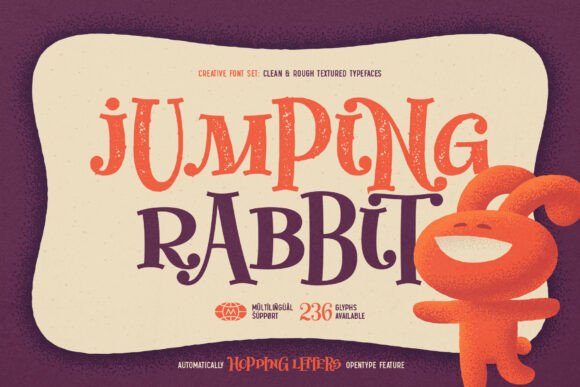
At its core, Jumping Rabbit is a font set characterized by its playful, hopping letters. Each character appears to be in motion, giving text a dynamic and whimsical quality. The set includes two distinct styles: Clean Regular and Textured Rough. This duality offers designers flexibility—the clean version works well for digital screens and crisp prints, while the textured rough variant adds a hand-crafted, tactile feel perfect for projects seeking an artisanal touch.
Each font in the Jumping Rabbit collection contains 236 glyphs, supporting multiple languages. This makes it a versatile choice for global projects. However, to unlock its full potential, one key feature must be understood and enabled: Contextual Alternates. This OpenType feature automatically changes the case for every next letter, creating a natural, bouncing rhythm in the text. It’s a subtle but powerful effect that prevents the font from looking repetitive and enhances its playful character.
Where Can You Use Jumping Rabbit?
The application of Jumping Rabbit spans a wide range of creative and commercial projects. Its design is inherently approachable, making it ideal for audiences of all ages, particularly children and families. Here are some practical scenarios where this font set shines:
- Children’s Book Design: The hopping letters naturally complement stories and educational materials, making reading a more engaging activity.
- Branding for Family-Focused Businesses: Daycares, toy stores, pediatric clinics, and kids’ apparel brands can use Jumping Rabbit to convey a friendly, welcoming identity.
- Event Invitations and Greeting Cards: Birthday party invitations, holiday cards, and celebration announcements benefit from its joyful aesthetic.
- Educational Materials and Apps: Worksheets, flashcards, and interactive learning apps can use the font to make content feel less intimidating and more fun.
- Social Media Graphics and Marketing: For campaigns targeting families or promoting lighthearted products, Jumping Rabbit adds a burst of personality to posts and ads.
- Crafting and DIY Projects: Scrapbooking, personalized gifts, and custom signage can all be enhanced with its playful texture.
Evaluating Suitability: Strengths and Considerations
Choosing a font is about more than just aesthetics; it’s about function and context. Jumping Rabbit excels in environments where creativity and approachability are priorities. Its strengths lie in its ability to immediately set a cheerful tone and capture attention. The inclusion of both clean and textured versions adds practical value, allowing designers to adapt the font to different mediums—whether it’s a website, a printed poster, or a digital app.
However, like any specialized tool, it has its limitations. Jumping Rabbit is not designed for body text in long-form documents like reports or academic papers. Its decorative nature can reduce readability in large blocks of text. Instead, it’s best used for headlines, logos, short phrases, and accent text. When incorporating it into a design, consider pairing it with a simple, highly legible sans-serif font for paragraphs to maintain balance and clarity.
Another consideration is technical compatibility. To benefit from the automatic case-changing feature, the software you use must support the “Contextual Alternates” OpenType feature. Most modern design software, such as Adobe Illustrator, Photoshop, and InDesign, as well as many web platforms, support this. It’s a simple setting to enable but crucial for achieving the intended effect.
Practical Guidance for Implementation
For creators and business owners looking to experiment with Jumping Rabbit, here are some actionable tips:
- Start with a Purpose: Define where the font will be used. Is it for a logo, a poster, or a website header? This will guide your choice between the Clean Regular and Textured Rough versions.
- Test for Readability: Always view the font at the intended size and in the intended context. What looks playful on a large screen might become illegible on a small mobile display.
- Pair Thoughtfully: Combine Jumping Rabbit with a neutral font. For example, use it for a main title and a clean font like Open Sans or Lato for supporting text.
- Check Language Support: While it supports multiple languages, always verify that the specific characters and diacritics needed for your project are included in the 236-glyph set.
- Embrace the Bounce: Let the font’s inherent movement guide your layout. Align text to create a sense of flow, and don’t be afraid to use it in non-linear arrangements for creative compositions.
Bringing Ideas to Life with Playful Typography
Ultimately, Jumping Rabbit is more than a novelty. It’s a design solution for anyone seeking to add originality, warmth, and a touch of whimsy to their work. For online users, it offers a way to personalize digital creations. For professionals, it provides a tool to connect with audiences on an emotional level. By understanding its features, recognizing its best-use scenarios, and implementing it thoughtfully, you can transform ordinary text into a delightful visual experience.
Whether you’re designing a poster for a local school fair, creating branding for a new children’s product, or simply looking to make a social media graphic stand out, Jumping Rabbit offers a unique and cheerful voice. Remember to enable those Contextual Alternates, pair it wisely, and let its playful energy elevate your next creative project.