Ancola: A Sans Serif for Stronger Brand Identities
In a world saturated with visual noise, the font you choose for your brand is more than a stylistic detail; it's a foundational decision. It communicates tone, professionalism, and memorability in an instant. For those building a visual identity from the ground up or refining an existing one, the search for a typeface that balances clarity with character is a common challenge. This is where a font like Ancola enters the conversation—a clean, versatile sans serif designed with the express purpose of creating strong logos and cohesive brand systems.
Understanding Ancola's Design Philosophy
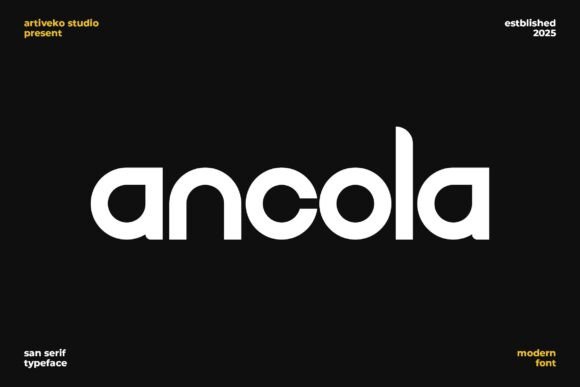
At its core, Ancola is a geometric sans serif. This means its letterforms are built on simple, precise shapes like circles and squares, resulting in a look that feels both modern and orderly. Its sharp lines and minimalistic elegance avoid unnecessary flourishes, prioritizing legibility and a clean aesthetic. This design approach makes it exceptionally adaptable. Whether it's set large for a bold logo or used for a website header, it maintains its structural integrity and visual appeal. The font's versatility is its key strength, allowing it to serve as a reliable tool across a wide spectrum of applications, from packaging and editorial titles to social media graphics and corporate presentations.
Why the Right Font Matters to Different People
The importance of a font like Ancola shifts depending on who you are and what you're trying to achieve. A graphic designer, for example, evaluates a typeface on its technical merits: its weight range, kerning pairs, and how well it pairs with other fonts. They need a font that offers flexibility and professional-grade features to meet client demands. For them, Ancola’s geometric structure and clean lines provide a solid, dependable foundation for complex branding projects.
Conversely, a small business owner or entrepreneur might approach the decision with different priorities. Their primary concerns are often practicality and cost-effectiveness. They need a font that is easy to license, simple to implement across various software, and guaranteed to look professional without requiring a deep knowledge of typography. Ancola’s design for strong logos directly addresses this need, offering a solution that can help a new business establish a credible visual presence quickly.
Practical Applications for Creators and Professionals
For freelancers, bloggers, and content creators, consistency is key to building recognition. Using a distinctive yet readable font like Ancola across a YouTube thumbnail, an Instagram post, and a blog header can create a unified aesthetic that audiences learn to associate with your work. Its clarity ensures that text remains readable even on small mobile screens, a critical factor for social media engagement.
Professionals in marketing and publishing value fonts that convey authority and clarity. In an annual report or a whitepaper, a typeface like Ancola can present data and arguments in a clean, digestible manner, enhancing the document's credibility. Its minimalistic elegance ensures the content remains the focus, supporting the message rather than distracting from it.
Aligning Ancola with Your Goals and Skill Level
Determining if Ancola is the right fit involves matching its characteristics to your specific project and expertise.
- For Beginners and Hobbyists: If you're creating your first logo or personal brand materials, Ancola offers a significant advantage. Its pre-designed structure minimizes the risk of common typographic mistakes. You can feel confident that the result will look polished and intentional, which is a huge boost when you're learning the ropes of design.
- For Experienced Designers: You'll appreciate Ancola's technical quality and versatility. Its geometric foundation makes it a reliable workhorse that can be adapted for a variety of client briefs. It pairs well with serif fonts for contrast or can stand alone for a thoroughly modern look, giving you creative flexibility within a dependable framework.
- For Educators and Publishers: Readability is paramount. Ancola’s clear letterforms make it suitable for educational materials, textbook titles, or website navigation where information must be conveyed without ambiguity. Its professional appearance also lends authority to academic or instructional content.
- For Business Owners: Your priority is likely long-term usefulness and commercial value. A font like Ancola can become a cornerstone of your brand identity, used consistently across your website, business cards, packaging, and advertisements. This consistency builds brand equity over time, making it a worthwhile investment.
Evaluating Quality, Flexibility, and Ease of Use
When considering a font, it's helpful to weigh several factors. Quality refers to the technical precision of the letterforms, spacing, and available character set. A high-quality font renders beautifully at any size. Flexibility is about the range of weights and styles (e.g., light, regular, bold, italic) that allow you to create hierarchy and emphasis within your designs. Ease of use involves how straightforward it is to implement in your preferred software, from Adobe Creative Suite to Canva or website builders.
Ancola’s design for logos and brand identities suggests it has been crafted with these priorities in mind. Its clean lines ensure clarity, its geometric structure provides a sense of order and modernity, and its versatility across applications indicates a thoughtful approach to real-world design needs. For anyone from a hobbyist making a personal blog header to a professional designing a corporate identity, these qualities translate into a tool that saves time, reduces guesswork, and delivers a reliable, professional outcome.
Ultimately, choosing a typeface is a personal and strategic decision. By understanding what a font like Ancola is designed to do—and how its strengths align with your own goals—you can make an informed choice that elevates your visual communication and helps your message resonate with clarity and style.