The Art of Elegance: Decoding the Allure of the Natalia Script Font
In the vast universe of typography, where block letters command attention and serif fonts whisper tradition, there exists a delicate space reserved for fluidity and grace. Within this space, script fonts hold a special place, mimicking the organic strokes of the human hand. However, not all script fonts are created equal. Some aim for the chaotic energy of street art, while others strive for the rigid precision of copperplate engraving. Standing proudly in the realm of sophistication and fluidity is Natalia, an elegant script font that captures a sophisticated, hand-penned visual voice. For designers, brand owners, and creatives, understanding the anatomy and application of a typeface like Natalia is key to mastering visual communication.
Understanding the Anatomy of Natalia
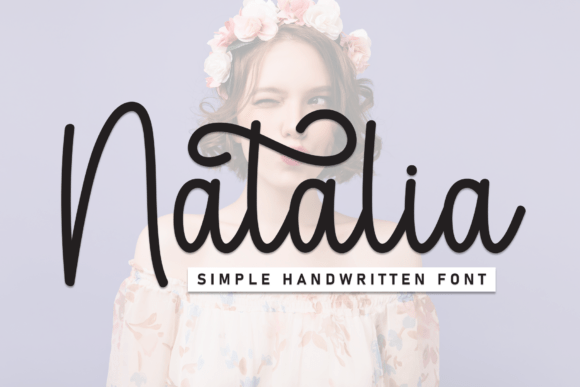
At first glance, Natalia appears deceptively simple. It is often categorized as a "simple handwritten font," a label that suggests casualness. However, a closer inspection reveals a complexity that elevates it above standard handwriting typefaces. The defining characteristic of Natalia is its use of long, horizontal monolinear strokes.
Let us break down what this means for the reader’s eye:
- Monolinear: Unlike calligraphic fonts that have thick downstrokes and thin upstrokes (created by a pointed nib), Natalia maintains a consistent line width. This uniformity creates a clean, modern aesthetic that is easier to read at various sizes.
- Horizontal Emphasis: While many scripts lean forward or loop vertically, Natalia stretches out. This horizontal flow creates a sense of stability and calm, guiding the eye gently from left to right without the vertical turbulence often found in cursive styles.
- Continuous Rhythm: The most magical aspect of this font is how it connects. The letterforms flow into one another in a continuous, ribbon-like rhythm. It mimics the sensation of a pen gliding effortlessly across high-quality paper, never lifting, creating a seamless thread of text.
The Psychology of Typography: Why "Simple" Works
Why do we gravitate toward fonts that look like they were written by hand? The answer lies in the psychology of typography. In a digital age dominated by cold, geometric sans-serifs and rigid interfaces, handwriting represents humanity. It suggests that a real person is behind the message, adding a layer of trust and intimacy that automated text cannot replicate.
However, there is a fine line between "human" and "messy." This is where Natalia excels. By being labeled as a simple handwritten font, it offers the warmth of a human touch without the illegibility of a doctor’s prescription note. It strikes a balance between professionalism and personality. It tells the viewer, "I care about aesthetics, but I am also approachable." This psychological balance makes it a powerful tool in the arsenal of modern design.
Practical Applications: Where Natalia Shines
The versatility of Natalia lies in its specific visual weight. It is not heavy enough to be used for body text (the bulk of a paragraph), nor is it so decorative that it becomes illegible. Instead, it thrives in specific niches where elegance is paramount.
1. Boutique Fashion Branding
The fashion industry thrives on exclusivity and style. A boutique clothing store or a high-end jewelry brand cannot rely on standard Arial or Times New Roman to convey luxury. Natalia’s ribbon-like rhythm mimics the flow of silk and fabric. When used on a logo, a clothing tag, or a website header for a fashion label, it immediately signals to the customer that they are entering a space of taste and refinement. It turns a brand name into a signature style.
2. Lifestyle Blog Headers
The digital landscape is crowded with blogs covering travel, wellness, interior design, and food. To stand out, a blogger needs a visual identity that feels curated. Using Natalia for blog headers or section titles adds a layer of personal storytelling. It suggests that the content is not just an algorithm output, but a curated experience shared by a real person. The font’s long horizontal strokes also help in creating wide, cinematic headers that look great on both desktop and mobile screens.
3. Professional Signatures
In the corporate world, the email signature is often the last impression you leave. A standard typed signature is functional, but a scripted signature using a font like Natalia adds a touch of executive flair. It mimics the look of a professional signature without the inconsistency of a scanned image. It suggests confidence and attention to detail, qualities highly valued in business communications.
4. Upscale Personal Stationery
There is a resurgence in the appreciation for physical stationery—wedding invitations, thank you cards, and personal letterheads. Natalia is a beautiful choice for upscale personal stationery. Its fluid connection between letters ensures that names and messages look cohesive and polished. For wedding invitations, specifically, the font provides a romantic, timeless quality that complements floral motifs and textured paper stocks perfectly.
The Technical Challenge: Legibility vs. Style
A common misunderstanding regarding script fonts is that "fancier" always equals "better." In reality, the most common mistake in design is sacrificing legibility for style. If a customer cannot read the name of your store because the letters are too loopy or the connections are broken, the font has failed its primary job.
Natalia solves this by adhering to a monolinear structure. Because the thickness of the line does not change drastically, the eye does not get confused by sudden shadows or thick blobs of ink. The continuous flow ensures that the brain recognizes the word as a whole unit rather than a collection of disjointed symbols. This makes Natalia an excellent choice for designers who want the "handwritten look" but need the reliability of digital clarity.
Integrating Natalia into Modern Design Systems
For those looking to implement this font into their projects, it is essential to understand how it fits into a broader design system. Typography is rarely used in isolation; it is a team sport.
Pairing is Key: Because Natalia is expressive and fluid, it should almost always be paired with a neutral, clean sans-serif font (like Montserrat, Open Sans, or Lato). If you pair Natalia with another decorative font, the result will be visual chaos. Use Natalia for the accents—the headlines, the pull quotes, the logos—and use the sans-serif for the readable body text.
Spacing and Size: Script fonts often require different tracking (letter spacing) than block letters. Because Natalia connects naturally, adding too much space between letters will break the "ribbon" effect, making the text look disjointed. It is best used at medium to large sizes where the beauty of the strokes can be appreciated, rather than crammed into tiny footnotes.
Conclusion: The Timeless Value of the Pen
In an era of rapid technological change, we often look backward to find beauty. The Natalia font represents a bridge between the analog past and the digital future. It takes the romanticism of a hand-penned note and packages it into a format that can be used on websites, apps, and digital media.
Whether you are a boutique owner looking to rebrand, a blogger seeking a fresh voice, or a designer crafting a wedding suite, Natalia offers a solution that is both elegant and functional. It reminds us that even in a world of pixels, the fluid, ribbon-like rhythm of the human hand remains one of the most powerful ways to communicate. By understanding its structure and applying it thoughtfully, you can elevate your projects from merely informative to truly expressive.