Command the Spotlight: Understanding the Architectural Elegance of the Stefania Font
In the crowded digital and physical landscape of modern design, typography is rarely just about readability anymore; it is about voice. A typeface must speak before the words are even read, conveying a sense of luxury, urgency, or avant-garde sophistication. Enter Stefania, a serif font that does not merely sit on a page but rather performs. Designed to redefine modern elegance through the lens of architectural geometry, Stefania has rapidly become a favorite tool for creators who need to make an immediate, lasting impact. It is a typeface that understands the balance between the rigidity of structure and the beauty of organic flow.
The Architectural Soul of Stefania
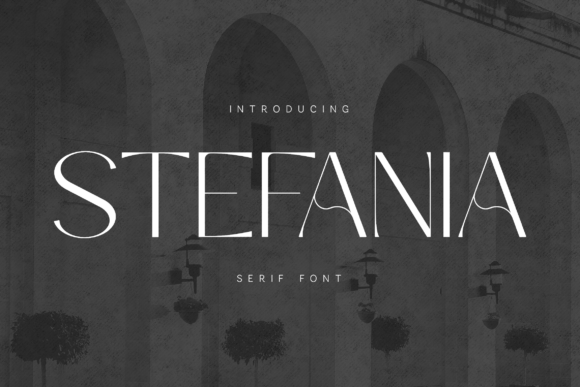
When we talk about fonts, we often describe them using terms like "thick," "thin," "curvy," or "blocky." However, Stefania demands a different vocabulary. Its design philosophy is rooted in architectural geometry. If you look closely at the letterforms, you will notice that they mimic the grand arches and structural integrity found in high-classical design, yet they are stripped of unnecessary ornamentation. This creates a "razor-sharp" aesthetic that feels incredibly modern.
The defining characteristic of this typeface is its visual rhythm. In music, rhythm is created by the alternation of sound and silence; in typography, it is created by the interplay of positive space (the letter) and negative space (the background). Stefania excels here because of its unexpected, flowing ligatures. A ligature is where two or more letters are joined into a single symbol. While traditional ligatures are often functional, designed to fix awkward spacing, the ligatures in Stefania are decorative and fluid. They create a continuous, sweeping line that connects characters in a way that feels both structured and incredibly fluid, much like the curve of a suspension bridge or the archway of a Renaissance cathedral.
Who is the Ideal Audience for This Typeface?
While a good font can technically be used anywhere, Stefania is designed with a specific psychological impact in mind. It speaks a language of exclusivity and high taste. Consequently, it resonates deeply with several distinct groups of professionals and creators:
- Fashion Industry Professionals: From haute couture labels to avant-garde streetwear brands, the fashion world relies on visual storytelling. Stefania offers the perfect blend of edgy modernism and classic elegance required for magazine headers and lookbooks.
- Art Curators and Galleries: The art world often struggles to find typography that doesn't overshadow the artwork but still commands respect. The geometric nature of Stefania allows it to frame art without competing with it.
- Luxury Brand Owners: Whether you are selling high-end jewelry, boutique real estate, or premium spirits, the font you choose signals the price point of your product. Stefania immediately signals "premium."
- Graphic Designers and Typographers: For creators who specialize in layout and composition, Stefania provides a unique tool to break the grid while maintaining alignment.
Deconstructing the Features: Why It Works
To truly appreciate Stefania, one must look beyond the surface and understand the technical and artistic choices that make it functional for high-concept design. It is not just a "pretty face"; it is a workhorse for specific types of visual communication.
The "Razor-Sharp" Serif
Traditional serif fonts, like Times New Roman, often have bracketed serifs—small feet that curve into the stem of the letter. Stefania strips this away. Its serifs are sharp, often flat and angular. This creates high contrast and a sense of precision. In the context of high-concept posters, this sharpness ensures that the text remains legible even when viewed from a distance or when printed in large, abstract formats. It cuts through visual noise.
Visual Rhythm and Flow
The "flow" of Stefania is what separates it from standard geometric fonts. Standard geometric fonts can feel cold and robotic. Stefania introduces a human touch through its curves. The letters seem to breathe. This is particularly useful in avant-garde luxury logos, where a logo must be static (printed on a box) yet feel dynamic (suggesting movement and life). The font manages to be both grounded and airborne simultaneously.
Real-World Scenarios: Putting Stefania to Work
Understanding a font's features is one thing; knowing how to apply them is another. Here are practical scenarios where Stefania transitions from a digital file to a powerful design element.
Scenario A: The Bi-Annual Fashion Magazine
Imagine a fashion magazine launching its Fall/Winter issue. The theme is "Structure in Nature." The creative director needs a header font that feels organic but looks expensive. Using Stefania for the main cover line, perhaps in a deep matte gold against a stark white background, achieves this perfectly. The architectural serifs ground the concept in "structure," while the flowing ligatures mimic the "nature" aspect. It creates a cover that a reader wants to keep on their coffee table, not just for the articles, but for the typography itself.
Scenario B: The Modern Art Gallery Identity
A new contemporary art gallery opens in a converted warehouse. They need a visual identity that bridges the gap between the raw industrial space and the refined art they display. By using Stefania for their logo and wayfinding signage, they create an immediate sense of sophistication. The font’s geometry mirrors the steel beams of the building, while its elegance mirrors the art on the walls. It tells the visitor, "This space is industrial, but the experience is luxury."
Scenario C: High-End Event Invitations
Consider a black-tie gala invitation. Often, script fonts are used to imply elegance, but they can sometimes look dated or difficult to read. A modern alternative is using Stefania in all-caps with wide tracking (letter spacing). This creates a breathless, cinematic look. The sharp edges of the letters suggest formality and precision, ensuring guests understand the gravity and prestige of the event immediately.
Evaluating Suitability: Strengths and Considerations
No single font is a magic bullet for every design problem. While Stefania is a powerful tool, it requires a discerning user. Before incorporating it into your next project, consider the following evaluation points.
The Strengths
- High Impact: Stefania is a statement font. It is designed to be seen. If you need a font that recedes into the background (like for long-form body text in a novel), this is not it. But if you need a headline that grabs the reader by the collar, Stefania is the answer.
- Modern Yet Timeless: Trend-based fonts often look dated within two years. Because Stefania draws on classical architectural principles, it possesses a timeless quality. It looks current today, but it will likely still look sophisticated in a decade.
- Brand Elevation: For businesses, typography is a trust signal. Using Stefania suggests that your brand pays attention to detail. It elevates a brand's perceived value simply by association with high-design principles.
The Considerations and Limitations
- Readability at Small Sizes: Because of its intricate ligatures and sharp, high-contrast features, Stefania may lose clarity when used at very small sizes (like 8pt footnotes or legal disclaimers). It is best reserved for headers, logos, and display text.
- Context Matters: Using a high-fashion font for a casual, fun brand (like a toy store or a fast-food chain) can create a cognitive dissonance. The font signals "luxury" and "seriousness." If your brand voice is playful and goofy, Stefania might feel out of place.
- Pairing Complexity: Finding a partner font for Stefania requires care. It is so stylistic that pairing it with another decorative font will result in visual chaos. It requires a very neutral, clean sans-serif or a simple body text font to balance its strong personality.
Practical Guidance for Implementation
If you have decided that Stefania fits your project's needs, here is how to get the most out of it. The goal is to let the font breathe.
Spacing is Key: Because of the flowing ligatures, you should be mindful of kerning (the space between specific pairs of letters). In some cases, you may want to increase the tracking (overall spacing between all letters) to let the architectural shapes shine without crowding each other.
Color and Contrast: Stefania looks best when there is a strong contrast. Think black on white, white on black, or metallic foil on dark paper. Avoid busy background images behind the text, as the intricate details of the serifs and ligatures can get lost against a noisy texture.
Respect the Geometry: When laying out your design, try to align other elements (like photos or lines) with the geometric angles found within the font. This creates a cohesive, grid-based layout that feels professional and intentional.
Conclusion
In the world of design, tools come and go, but style endures. Stefania is more than just a collection of vectors; it is a bridge between the structural past and the fluid future. It offers creators, business owners, and designers a way to command the spotlight without shouting. By combining razor-sharp geometry with the unexpected beauty of flowing ligatures, it provides a visual language that speaks of elegance, precision, and high-concept artistry.
Whether you are crafting the identity for the next big fashion house, designing a poster for a major gallery, or simply looking to elevate your personal creative projects, understanding how to wield a font like Stefania is a valuable skill. It reminds us that in a digital world, the right typography can turn simple words into a work of art.